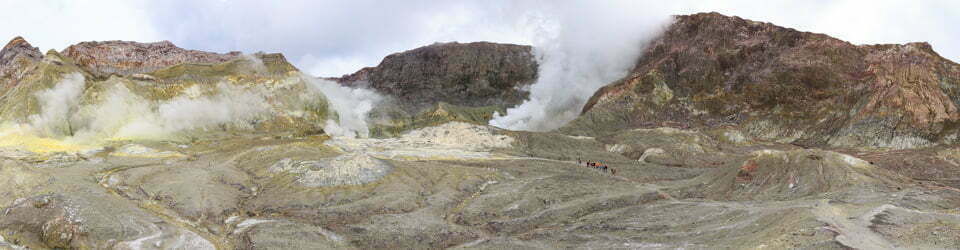

Saturday 25/10/2025 Mount Grenfell Art Site Walk – Mount Grenfell Historic Site – Nglyampaa Walking Track – Mount Grenfell 361 m
Mount Grenfell Historic Site, NSW
Ngiyampaa Country (Ngiyampaa Wangaaypuwan people)
Participants: Stephen Davies (Photos), Sue Davies (Report)
After completing the Cobar parkrun and visiting the Sound Chapel, we decided to spend the afternoon in the Mount Grenfell area, about a 50-minute drive west of Cobar.
Max elevation: 360 m
Total climbing: 142 m
Total descent: -130 m
Average speed: 2.99 km/h
Total time: 02:28:51
The afternoon was starting to warm up as we left for the walk. We barely left the car when I spotted a Central Bearded Dragon walking through the picnic area. It was very patient while we took multiple photos of it.
Our first stop was to view the magnificent complex of rock art and the surrounding Ngiyampaa Country. The paintings are estimated to be around 3,000 years old and depict human and animal figures as well as hand stencils. There are three rock sites that are protected behind wire fences, and the paintings are throughout the overhangs.
The people who lived around this area are the Karulkiyalu or Stone Country people. They are aptly named, as this is dry and rocky land.
I saw a cat-like creature with a striped tail that wandered off into a cave. I thought it may be a marsupial or a type of quoll, but I’m not sure.
We then continued on the Ngiyampaa Walkabout, which took us on a circuit to the top of the ridge for views over the hills. On the way up, I came across two goannas mating. One was about twice the size of the other; the larger one was bleeding. They dispersed to separate trees as I approached.

Lace Monitor (Varanus varius)
There were way too many feral goats; they really are in plague proportions! We did see a few kangaroos, a few as road kill and several emus with chicks. Interestingly, we didn’t see any goats as road kill. They seemed to stay away from cars, although there were many at the side of the road.
It was warm by the time we returned to the car, and the flies were getting annoying, but this area was really worth a visit for the stunning artwork, wildlife and desert environment.
Amongst other photographically recorded observations during this walk, we were able to confirm sightings of each of the following species: Central Bearded Dragon (Pogona vitticeps), Emu (Dromaius novaehollandiae), Lace Monitor (Varanus varius)
Clickable icons on this world map will open the related trip report
A detailed, searchable trip list with links to reports, photo galleries
Information on Parks signage along the way
Yamakarra mayingkalkaa – How you going all you people?
Mount Grenfell Historic Site
The Mount Grenfell Historic Site Board d Management welcomes you to this special place. The Mount Grenfell reserves are jointly managed by us – the Ngiyampaa Wangaaypuwan People – and the NSW National Parks and Wildlife Service (NPWS).
We identify ourselves in a number of ways.
Our languages are Ngemba in the north and Ngiyampaa in the south, but we all speak the Wangaaypuwan way – through social structure, thingkaa (your ‘meat) and geographically.
These geographic features are Stone (Karul) Country, Nelia (Nhillyi) Tree, and Belah (Pilaarr) Tree and what we belong to (kiyalu), e.g. Karul-kiyalu means belonging to Stone Country. Each group has distinctive features, but we are all one.
In the beginning, the Spirit Beings formed ngurrampaa (camp-world) and gave our ancestors a set of rules to live and take care of Country by. Our ancestors passed down this knowledge through language, stories, songs, dance, and ceremonies on how we are one with the spiritual landscape.
It has been a long journey for our people to gain rights in our own Country and we acknowledge and thank those many people before us who fought for those rights.
We also thank the NSW Parliament who passed the amendments to the National Parks and Wildlife Act unanimously to enable us to be re-engaged in the management of Country. Through this initiative, Ngiyampaa descendants can again take part in the management of Mount Grenfell Historic Site.
Our vision is to teach our young people to care for Country, empower us all to retain, celebrate and reconnect with our traditions in an inclusive way.
This needs to be undertaken as a matter of urgency, because it’s now our responsibility to pass on this knowledge in accordance with our traditions and customs. Another important goal is to further involve ourselves in land management and pursue additional opportunities to care for Country.
STONE COUNTRY PEOPLE – karulkıyalu
The people who camped in the area around Mount Grenfell Historic Site are Karulkiyalu or ‘Stone Country’ People.
Other language groups to the south of here are the Pilaarrkiyalu or ‘Belah Tree’ People and the Nhiilyikiyalu or ‘Nelia Tree’ People. The area that is now Mt Grenfell Historic Site was visited by people from all these groups.
Historically, Ngiyampaa Wangaaypuwan were associated with the dry backcountry of western New South Wales. Ngiyampaa People only visited the Darling-Barwon and Bogan Rivers during times of severe drought and only at points where the soil was red. Like Aboriginal people everywhere, Ngiyampaa Wangaaypuwan maintained responsibilities for looking after Country and shared resources, stories, and a host of cultural ties with neighbouring peoples.
Along the boundaries of ngurrampaa (camp world) there is shared Country – lands which would be used by other Aboriginal people in times of drought, for ceremony, for marriage or for trade. To the east is Wailwan Country, to the south Wiradjuri Country and to the north and west, Paakantji/Baakantji Country. Extensive family networks and traditional kinship connections cover the length and breadth of ngurrampaa.
Mount Grenfell Historic Site is part of the line of mythological places and rock art sites running from the Darling River below Bourke, through Gundabooka, Wuttagoona, Mount Grenfell Historic Site, Bulla Bulla, Mount Doris, Neckarboo, Corinya, Mount Manara, and down to Pooncarie back on the Darling River.
This line of art sites is believed to have delineated the boundaries of Ngiyampaa Country, where Ngiyampaa overlapped with Paakantji/Baakantji, where important mythological events occurred and where mythological pathways intersect.
For Aboriginal people, places are not that important by themselves, because they are tied to everything else and it is those ties that make places important.
Prior to European settlement, the transmission of much cultural knowledge occurred during the performance of ceremonies which could be performed only in certain places and at certain times.
As is the case for other Aboriginal people throughout Australia, restrictions of movement and forced relocation of Ngiyampaa Wangaaypuwan by early colonisers has interfered with the transmission of knowledge. Once ceremonial life ceased, it became very challenging for secret and sacred knowledge to be passed on appropriately.
While Ngiyampaa Wangaaypuwan are widely dispersed today, they are reclaiming cultural knowledge and rebuilding a strong connection with ngurrampaa.
The handback of the Mount Grenfell Historic Site to the Aboriginal owners was an important first step for the Ngiyampaa Wangaaypuwan community.
Since then, Ngiyampaa Wangaaypuwan are seeking more opportunities to be on Country, and renew and revitalise connection to Country. The park provides access to Country and contributes to this process of reconnection.
Good Tucker
Ngurruy and kirrpatya everywhere
While they might not be so obvious these days, emus and kangaroos were once prolific here. Ngurruy (emu), and kirrpatya (kangaroos) provide food, skin, and bone for the Ngiyampaa Mayinkaa.
Cook carefully and you will see emus and kangaroos painted on the shelter walls – some people think that the art was made to teach life skills.
The local landscape features, geology, scenic highlights, flora, fauna, Indigenous history, white history and other nearby walks in the area (Perplexity AI Model)
Landscape Features and Geology
Mount Grenfell rises as a 361-metre rocky ridge on the Cobar Peneplain, surrounded by low-relief plains and scattered mallee bushland. The slope consists of ancient sedimentary rocks, mainly sandstone and conglomerate, with characteristic overhangs, shelters, and exposed cliff faces. These rock features provide both dramatic scenery and suitable surfaces for the large galleries of Aboriginal rock art for which the site is renowned. Semi-permanent waterholes, bones of ephemeral creeks, and pockets of alluvial soil break the otherwise red-earth terrain, supporting life in a marginal environment.
Scenic Highlights
The Mount Grenfell Art Site Walk (approximately 3 kilometres return) leads visitors past three celebrated galleries of Aboriginal rock art, protected beneath the rocky overhangs. The Ngiyampaa Walking Track journeys further through open grasslands, mallee eucalypt stands, and up the Mount Grenfell summit, offering 360-degree views over surrounding drylands. Scenic highlights include the contrast between vibrant ochre paintings and stark rocky ridges, as well as panoramic vistas from summit lookouts. The site’s tranquillity is underscored by birdsong and the presence of native wildlife.
Local Flora
Vegetation is characteristic of the western NSW arid zone. Mallee eucalypts (Eucalyptus socialis, Eucalyptus gracilis), white cypress pine (Callitris glaucophylla), belah (Casuarina cristata), rosewood (Alectryon oleifolius), poplar box (Eucalyptus populnea), and river red gum (Eucalyptus camaldulensis) dominate various habitats. Spinifex, wilga, and array of acacias occur in the understory. Many plants, including kurrajong (Brachychiton populneus), nardoo (Marsilea drummondii), and quandong (Santalum acuminatum), are culturally significant as food or medicine sources for Ngiyampaa people. Seasonal wildflowers, native grasses, and herbs provide bursts of colour in wetter months.
Local Fauna
The reserve supports 195 native animal species, with bats and birds making up the most diverse groups. Emus (Dromaius novaehollandiae), western grey kangaroo (Macropus fuliginosus), bearded dragon (Pogona barbata), shingleback skink (Tiliqua rugosa), and various geckos inhabit rocky and grassy areas. Threatened fauna include kultarr (Antechinomys laniger), stripe-faced dunnart (Sminthopsis macroura), bat species like the yellow-bellied sheath-tailed bat (Saccolaimus flaviventris), and Corben’s long-eared bat (Nyctophilus corbeni). Birdlife includes red-capped robin (Petroica goodenovii), thornbills, parrots, and mixed flocks associated with woodland and riverine habitats.
Indigenous History
Mount Grenfell is on Ngiyampaa Wangaaypuwan Country and sustains some of the most significant Indigenous art sites in New South Wales, with over 1,300 recorded rock art images. These depict human and animal figures, hand stencils, ceremonial marks, food, medicine, and Dreaming stories, layered across generations into three main galleries along the art site walk. Mount Grenfell provided shelter, water, gathering places and spiritual sites for thousands of years. In 2004, traditional ownership was formally recognised and the area was returned to Ngiyampaa people, now jointly managed with National Parks agencies. The reserve embodies ongoing spiritual, cultural, and practical connections with Country.
White History
European impacts began with pastoral occupation and exploration in the nineteenth century, with the site later representing patterns of settlement for Western Division New South Wales. Following displacement, Ngiyampaa people were forcibly moved to stations northwest of Wiradjuri country and in the 1930s relocated to missions like Murrin Bridge. Mount Grenfell Historic Site is now preserved both for its natural values and as a testament to resilience and cultural renewal among Ngiyampaa descendants. The establishment of walking tracks, picnic facilities, and management arrangements ensures conservation and respectful visitor engagement.
Clickable icons on this world map will open the related trip report
A detailed, searchable trip list with links to reports, photo galleries
